Clothes are 服 (ふく, fuku). To say what you are wearing, choose the verb to match the item: 着ています (きています, kite imasu) for a shirt or coat, はいています (haite imasu) for trousers or shoes, and かぶっています (kabutte imasu) for a hat. For example, シャツを着ています。 (シャツをきています, shatsu o kite imasu) means “I am wearing a shirt.”
Start with the clothes you put on this morning. The goal is to name them and describe your outfit, not memorize every item in a department store.
Name the clothes first
Here are the item names to say aloud:
- シャツ (shatsu): shirt.
- セーター (seetaa): sweater.
- コート (kooto): coat.
- ズボン (zubon): trousers or pants.
- スカート (sukaato): skirt.
- 靴下 (くつした, kutsushita): socks.
- 靴 (くつ, kutsu): shoes.
- 帽子 (ぼうし, boushi): hat.
The Japan Foundation's Erin's Challenge!, Lesson 10, “Uniform & Casual Wear,” gives illustrated clothing vocabulary, including trousers, skirts, shoes, socks and hats. Rocket Japanese's “Clothes in Japanese” includes coats and sweaters with audio. The readings and meanings on the cards above come from JMdict.
Keep the long vowels in the katakana words: kooto, not koto, and sukaato, not sukato. The mark ー lengthens the preceding vowel. The doubled vowels in this page's romaji show that length.
Match the item to its wearing verb
English lets you wear a shirt, shoes and a hat with the same verb. For these Japanese examples, you need three.
- きる kiru着るN5
to wear (on the upper body)
- Example上着うわぎ uwagijacket, outer garment
These cards show dictionary forms. The Japan Foundation's Irodori Elementary 2, Lesson 2, pairs clothes with their verbs and explains the forms used for someone who is already wearing them.
着る (きる, kiru) goes with shirts, sweaters and coats. To describe one you have on now, use 着ています (きています, kite imasu):
- セーターを着ています。 (セーターをきています, seetaa o kite imasu): I am wearing a sweater.
- コートを着ています。 (コートをきています, kooto o kite imasu): I am wearing a coat.
はく (haku) goes with trousers, skirts, socks and shoes. Its form here is はいています (haite imasu):
- ズボンをはいています。 (zubon o haite imasu): I am wearing trousers.
- 靴をはいています。 (くつをはいています, kutsu o haite imasu): I am wearing shoes.
かぶる (kaburu) goes with a hat. Use かぶっています (kabutte imasu):
- 帽子をかぶっています。 (ぼうしをかぶっています, boushi o kabutte imasu): I am wearing a hat.
The item comes before を (o), pronounced o here. These sentences leave “I” unstated; when you are describing yourself, the context supplies it. The same wording can describe someone else's clothes when that person is already the topic.
Wearing now is not the same as putting on later
Compare the shirt sentences:
- シャツを着ます。 (シャツをきます, shatsu o kimasu): I will put on a shirt.
- シャツを着ています。 (シャツをきています, shatsu o kite imasu): I am wearing a shirt.
The first can also describe a habit when the context calls for it. The second describes the shirt being on you now. In this use, the te-form plus います (imasu) expresses the resulting state, not the action of pulling the shirt over your head.
Notice the three different forms you have met: 着て (きて, kite), はいて (haite), かぶって (kabutte). Do not simply add the same ending to each dictionary form.
Describe an outfit without looking back
Imagine that you are wearing a white shirt, black trousers and a hat. This is a practice scene.
- Say “I am wearing a white shirt.”
- Say “I am wearing black trousers.”
- Say “I am wearing a hat.”
- Swap the trousers for a skirt. Does the wearing verb change?
Answer key:
- 白いシャツを着ています。 (しろいシャツをきています, shiroi shatsu o kite imasu).
- 黒いズボンをはいています。 (くろいズボンをはいています, kuroi zubon o haite imasu).
- 帽子をかぶっています。 (ぼうしをかぶっています, boushi o kabutte imasu).
- No. スカートをはいています。 (sukaato o haite imasu): I am wearing a skirt.
For help changing the colors, see colors in Japanese and how to put them before an object.
Now test the item names out of order. Say each reading and meaning before revealing its card, then choose its wearing verb.
帽子Tap to reveal
ぼうし boushihat
靴Tap to reveal
くつ kutsushoes
セーターTap to reveal
セーター seetaasweater
ズボンTap to reveal
ズボン zubontrousers
コートTap to reveal
コート kootocoat
靴下Tap to reveal
くつした kutsushitasocks
スカートTap to reveal
スカート sukaatoskirt
シャツTap to reveal
シャツ shatsushirt
Got it: 0 of 8
Use your own outfit as the next prompt
Before your next phone check, name one thing you are wearing and say the complete sentence without this page. If you forget the verb, check the matching group above and try again later. This is a practice suggestion, not an outfit-recognition feature.
Lock In Japanese offers vocabulary widgets and quizzes before access to apps you choose to seal. Our lock-screen learning guide explains the routine. This page's flip cards are separate practice; they do not unlock an app or check your sentences.
For another everyday vocabulary group, try Japanese weather words: describe what it is like outside before deciding whether to take your coat.
Further reading
- Japan Foundation, Irodori: Japanese for Life in Japan, Elementary 2, Lesson 2, “He looks a serious person.”: section 1 vocabulary preparation and grammar note 2, clothing-verb pairings and the state of wearing something.
- Japan Foundation, Erin's Challenge! I Can Speak Japanese., Lesson 10, Develop vocabulary, “Uniform & Casual Wear”: illustrated clothing names and readings.
- Sayaka Matsuura, Rocket Japanese, “Clothes in Japanese”: clothing vocabulary with audio, including coats, sweaters and hats.
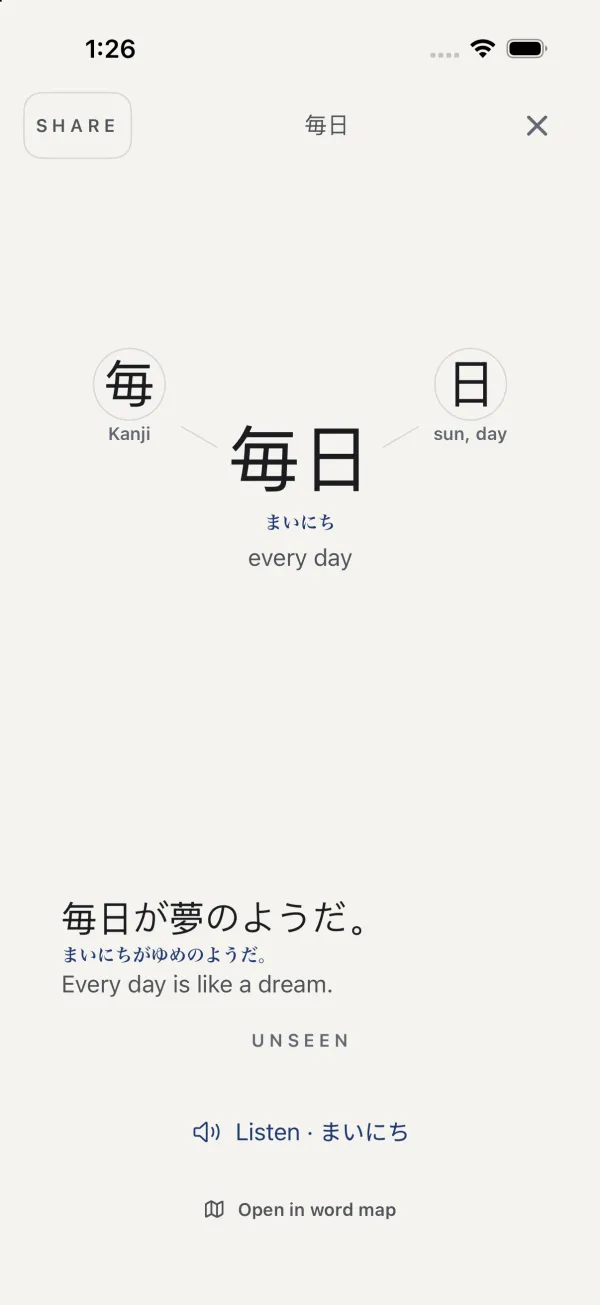
Every word opens like this in Lock In
Kanji, kana and a real sentence, on your lock screen.

Example sentence from Tatoeba, CC BY 2.0 FR.
Word data: JMdict and KANJIDIC2 (EDRDG), CC BY-SA 4.0, adapted.